Flip a House Furniture Tier List
Community S–D ranks for Flip a House décor—sell-price impact versus unlock cost.
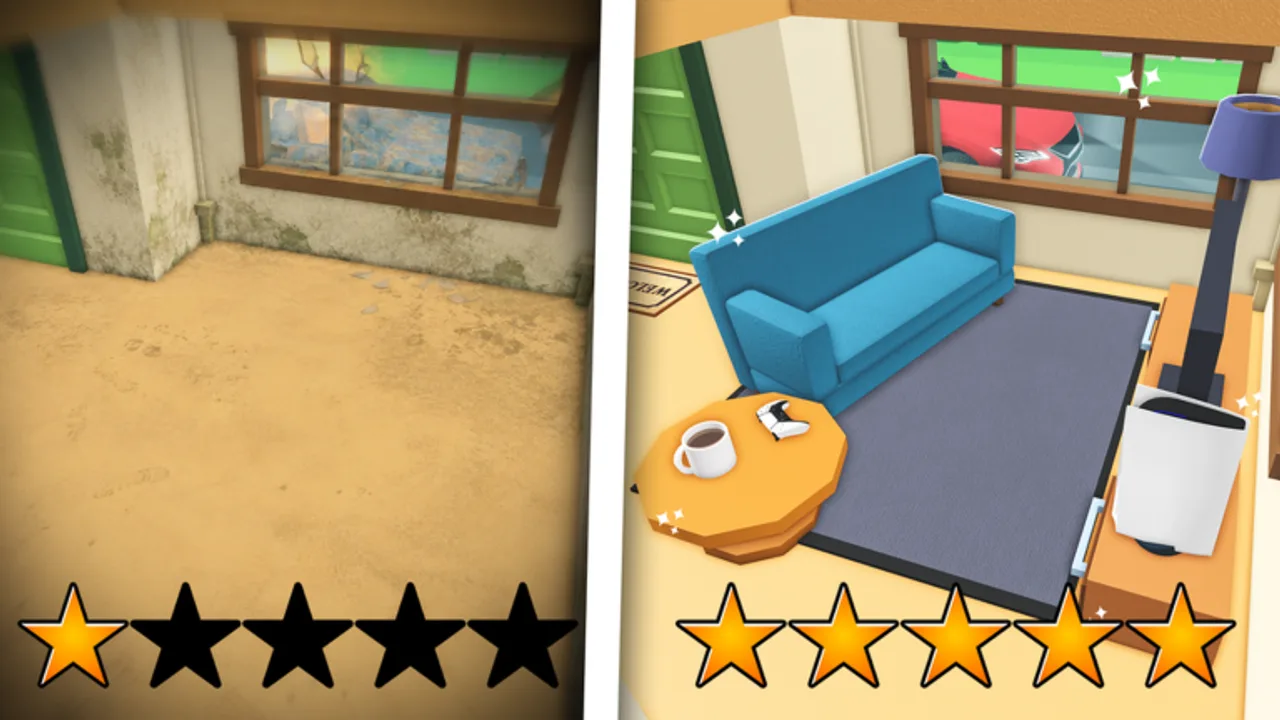
Cleaning gets the house ready. Furniture gets the house sold. In Flip a House! you clear trash, vacuum or scrub, then stage rooms before cashing out and climbing into bigger properties. This tier list ranks furniture and décor roles by sell-price impact versus cost. Like the Tools Tier List, grades are community guidance and may shift when Increates House patches the shop or buyer formula.
Deep placement advice lives in Furniture & Selling. Money pacing lives in Make Money Fast. Use this page to decide what class of buy deserves your flip profits first.
How furniture tiers work
We score pieces and packages on:
- Sell-price impact — How reliably the item (or set) lifts the final offer compared with leaving the room sparse.
- Cost efficiency — Impact per cash spent; a mid sofa that moves the needle beats a luxury lamp that does not.
- Room coverage — Whether the buy completes a bedroom, living room, or kitchen “story” buyers expect.
- Scalability — Value on larger houses after you outgrow starter shacks.
Exact catalog names differ over time, so we rank roles (beds, seating, kitchen basics, accent spam, etc.). Map your shop SKUs to the closest role.
S tier — high impact per flip
Core room packages that make a space feel finished—bed + side table logic in bedrooms, sofa + table logic in living rooms, essential kitchen surfaces—belong in S when they consistently raise offers without demanding every last coin. Completing the function of a room usually beats scattering random décor.
Why S: Strong sell-price impact, clear midgame value, and predictable payback when you sell frequently. After tools stop bottlenecking cleans, these packages are the next cash sink that still grows your bankroll.
In co-op, assign one player to haul S-tier furniture while others finish scrubbing so staging starts the moment rooms are dry.
A tier — strong supporting buys
Quality seating sets, dining clusters, and storage pieces that fill obvious empty floorspace sit in A. They may cost more than bare-minimum S packages but still show up in better offers when the house is otherwise clean.
Matched décor bundles (coordinated colors or styles for one room) also land in A if buying the bundle is cheaper than piecing random accents that clash. Coordination reads as intentional staging—important when buyers “walk” a freshly flipped home.
B tier — solid once basics exist
Secondary comfort items—extra chairs, rugs that define zones, modest wall art—are B. Add them after beds and main seating exist. On tiny starter houses, skipping some B items can be correct so you unlock vacuum-class tools faster (see the Tools Tier List).
Outdoor or niche room pieces that only appear on certain properties also stay B: great when the lot includes that space, average when it does not.
C tier — filler and early compromises
Cheap filler décor that reduces emptiness but barely moves sell price is C. Use it to avoid barren rooms when cash is low, then replace with A/S packages on the next flip cycle. C-tier is a bridge, not a build identity.
One-off novelty props with weak valuation signals also sit here. If it is mainly for screenshots, buy it with surplus—not with money earmarked for the next house tier.
D tier — skip while climbing
Luxury vanity pieces with huge price tags and unclear sell returns are D for early and midgame. So are duplicate spams (six identical lamps) that eat budget without covering new room functions. Wait until your cleaning tools are online, your flip checklist is smooth, and you are tackling larger houses with leftover profit.
D-tier can become situational later for flex staging; it is a poor first unlock.
Furnish order that protects profit
- Confirm the house is actually clean—half-scrubbed rooms waste furniture spend. Follow Cleaning Tips.
- Place S-tier room completers in every major space buyers will judge.
- Add A-tier supports where floors still feel empty.
- Sprinkle B/C only with leftover cash.
- Sell, then reinvest using the Flip Checklist.
If a sale disappoints, ask whether you under-furnished functions (no bed, no seating) or over-spent on D-tier flair. Most bad flips are one of those two mistakes.
Co-op staging habits
With up to four players, split cleaners and stagers. Stagers should pull from a shared priority list: S packages first, then A. Avoid four people buying separate C-tier impulse décor in the same room. Voice or chat calls like “bedroom done / living needs sofa” keep the sell timer honest.
Related pages
- Furniture & Selling — placement and offer mindset
- Tools Tier List — upgrade cleaning before luxury décor
- Tier List Hub — shared ranking criteria
- Make Money Fast — when to push bigger houses
Furnish for buyers, not only for vibes—and let sell receipts promote pieces into higher tiers over time.
Frequently Asked Questions
Quick answers for Flip a House players.
Should I furnish before the house is fully clean?
No. Finish trash, vacuum, and scrub passes first. Dirty rooms waste furniture budget and can tank the sell offer.
Are luxury items always D tier?
Early on, yes—prioritize room-completing packages. Luxury can be fine later when tools and core furniture are funded.
Where do I learn placement tips?
Use the Furniture & Selling guide for layout habits, then return here when choosing what to buy next.
Do furniture tiers change in co-op?
The grades stay the same; co-op only changes how fast you can stage. Still buy S and A priorities first.